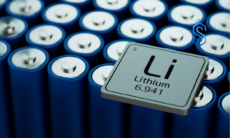
Kolkata: Exide Industries is preparing for potential supply-chain disruptions arising from possible Chinese export restrictions on critical lithium-ion battery materials, with plans to maintain approximately three months of raw material inventory and secure supplies through long-term purchase agreements.
The company is also monitoring possible export controls linked to energy densities, which could increase procurement lead times if introduced.
Exide Industries currently sources 100% of the raw materials required for its lithium-ion cells from vendors approved by its technology partner, China’s SVOLT.
Although the company had not reported any export restrictions or suspension notices affecting its supplies as of the November 5 earnings call, the possibility of tighter Chinese export controls remains on its radar.
The company’s management discussed the potential supply-chain risks during its Q2 FY27 earnings call on November 5. The official transcript was filed with the stock exchanges on November 10.
Pravin Saraf, Managing Director and CEO of Exide’s lithium-ion project, said the company had already taken precautionary measures through long-term procurement agreements and inventory planning to manage potential disruptions.
“To safeguard ourselves, we have also done long-term purchase agreements with the suppliers. This is one which is giving security to us, and second, of course, keeping the inventory for the lead time,” Saraf said.
Exide Still Sources 100% of Lithium-Ion Cell Raw Materials From SVOLT-Approved Vendors
Despite its plans to develop a domestic lithium-ion cell supply chain, Exide currently depends entirely on vendors approved by SVOLT for its raw material requirements.
Managing Director and Chief Executive Officer Avik Roy said the company had not independently developed alternative low-cost suppliers and was continuing to test prototypes and samples using materials sourced through its technology partner’s approved vendor network.
“These materials are 100% from the approved vendors of our technical partner, SVOLT. We have not ventured out and tried to develop our own low-cost vendors. So all the prototypes, all the samples are being tested through the same raw material vendor-supplied material,” Roy said.
Why Exide Is Keeping Three Months of Lithium-Ion Cell Raw Material Inventory
Exide Industries has also entered into long-term purchase agreements with suppliers to secure the availability of critical raw materials.
These measures are particularly relevant as Exide moves towards scaling up production at its Bengaluru lithium-ion cell manufacturing facility.
Roy said the working capital requirements associated with the lithium-ion cell business ramp-up had already been covered within the company’s board-approved annual capital allocation.
Exide Industries Targets 50-60% Lithium-Ion Cell Localisation in 2-3 Years
Alongside its supply-chain risk management measures, Exide Industries is working to reduce its dependence on imported materials by developing domestic suppliers.
The company aims to localise 50-60% of the bill of materials (BOM) for its lithium-ion cells in India over the next two to three years.
More than 20 Indian suppliers are currently working with Exide at different stages of material testing, specification checks and prototype development.
Roy said localisation decisions would depend on the technical importance and cost contribution of individual components rather than simply increasing the proportion of locally sourced materials.
“It is just not localization for the sake of localization. You have to understand the technical criticality of that component… Secondly, how much cost impact it has on the complete BOM, whether it is a minuscule contributor or a large-scale contributor in the whole BOM cost,” Roy said.
He added that the shelf life of individual components would also influence localisation priorities.
The localisation process involves several stages, starting with material testing and specification checks using coin cells. This is followed by prototype cell manufacturing, performance evaluation and final cell validation.
Saraf said more than 20 domestic suppliers were already working closely with the company.
“We have more than 20+ local suppliers already working with them closely, giving them the inputs,” Saraf said. “In few cases, we are already at the stage of performance checking. In few stages, it is at the first stage.”
However, these suppliers are still at the pilot stage and will need to develop capabilities to support large-scale manufacturing.
Saraf also highlighted the need for government support, including under the production-linked incentive (PLI) scheme, to improve the cost competitiveness of domestic suppliers.
Fresh OEM Validation Required
Exide’s efforts to develop an Indian supply chain will also require additional validation from its customers, particularly original equipment manufacturers (OEMs).
Whenever the company shifts from materials supplied through SVOLT-approved vendors to domestically sourced components, the resulting cells will need to undergo fresh customer validation.
Roy said the company would not compromise on component performance while moving towards localisation.
“You have to localize your supply chain. You can’t avoid that. But that’s maybe two to three years from now. First, we have to be satisfied with their performance,” he said.
This means Exide Industries’ domestic sourcing plans will depend not only on supplier readiness but also on successful technical validation and customer approvals.
Exide’s Lithium-Ion Cells Carry 5-10% Cost Gap Against Chinese Imports
Another challenge for Exide Industries is the current cost difference between its domestically manufactured lithium-ion cells and imported Chinese cells.
Management said Exide’s cells currently carry a 5-10% cost gap over Chinese imports on a landed basis. The difference varies depending on the cell form factor and chemistry.
According to Saraf, Exide’s cell pricing is indexed to the landed price of comparable cells from China.
Despite the cost difference, Roy said OEMs recognise the strategic importance of having an alternative domestic supplier.
“No OEM or no large OEM will spend so much of time and resource on validating our cell unless they have a strategic interest in having a second source and a local source,” he said.
Exide Industries Starts Generating Revenue From Lithium-Ion LFP Cells
Exide’s supply-chain preparations come as its lithium-ion cell manufacturing business begins commercial operations.
The company started generating revenue from lithium iron phosphate (LFP) cells in October, following the commissioning of its 6 GWh Bengaluru gigafactory on September 23.
Its nickel manganese cobalt (NMC) cells are expected to enter commercial supplies after completing their longer validation process.
During the November 5 earnings call, Saraf indicated that small-quantity NMC supplies to smaller customers could begin from December 2026.
Roy said supplies to major OEMs were expected from the beginning of the fourth quarter or around February, and “surely this fiscal year”.
Exide’s LFP cells are currently undergoing validation with telecom operators and are already being used in the company’s own electric rickshaw battery packs.
For battery energy storage system (BESS) cells, the company said internal validation results were positive. However, manufacturing decisions will depend on greater clarity under the PLI scheme, for which Exide plans to apply.
Exide Industries Invests ₹5,352 Crore in Lithium-Ion Subsidiary
Exide Industries has invested a cumulative ₹5,352 crore in its lithium-ion subsidiary, Exide Energy Solutions Limited (EESL). This includes ₹550 crore infused in the current financial year.
The 6 GWh Bengaluru gigafactory was commissioned on September 23 as the company prepares to scale up lithium-ion cell production.
The localisation programme, supplier development and inventory planning are part of the company’s broader efforts to establish its battery manufacturing operations and strengthen supply-chain security.
Exide Industries Q2 FY27 Revenue Rises 20.3% to ₹5,026 Crore
Separately, Exide Industries reported standalone revenue of ₹5,026 crore for the quarter ended September 30, 2026, marking a 20.3% increase from ₹4,178 crore in the corresponding quarter last year.
Standalone EBITDA increased 53.6% to ₹606 crore from ₹395 crore, while EBITDA margin expanded by 270 basis points to 12.1%.
Profit before tax (PBT) rose 75.5% to ₹522 crore, while profit after tax (PAT) increased 75.1% to ₹386 crore from ₹221 crore in the year-ago quarter.
Earnings per share stood at ₹4.55, compared with ₹2.60 a year earlier.
For the first half of FY27, standalone revenue increased 18.9% to ₹10,331 crore, crossing the ₹10,000 crore mark for the first time.
H1 EBITDA rose 33.8% to ₹1,262 crore, while PBT increased 46.5% to ₹1,066 crore. PAT grew 46.7% to ₹794 crore, with EPS at ₹9.34.
The company said it remained debt-free on a standalone basis, supported by healthy operating cash flows.
Automotive OEM Business Grows Over 25% for Fourth Consecutive Quarter
During Q2 FY27, Exide Industries’ automotive OEM business recorded growth of over 25% for the fourth consecutive quarter.
Its two-wheeler and four-wheeler replacement businesses also reported double-digit growth for the fourth consecutive quarter.
The company’s home inverter business grew 20%, solar business increased over 40%, and exports registered growth of more than 20%.
Exide Industries also signed a long-term strategic cooperation agreement with Germany-based ExCom Energy Solutions GmbH for industrial batteries and energy storage solutions across the European Economic Area.